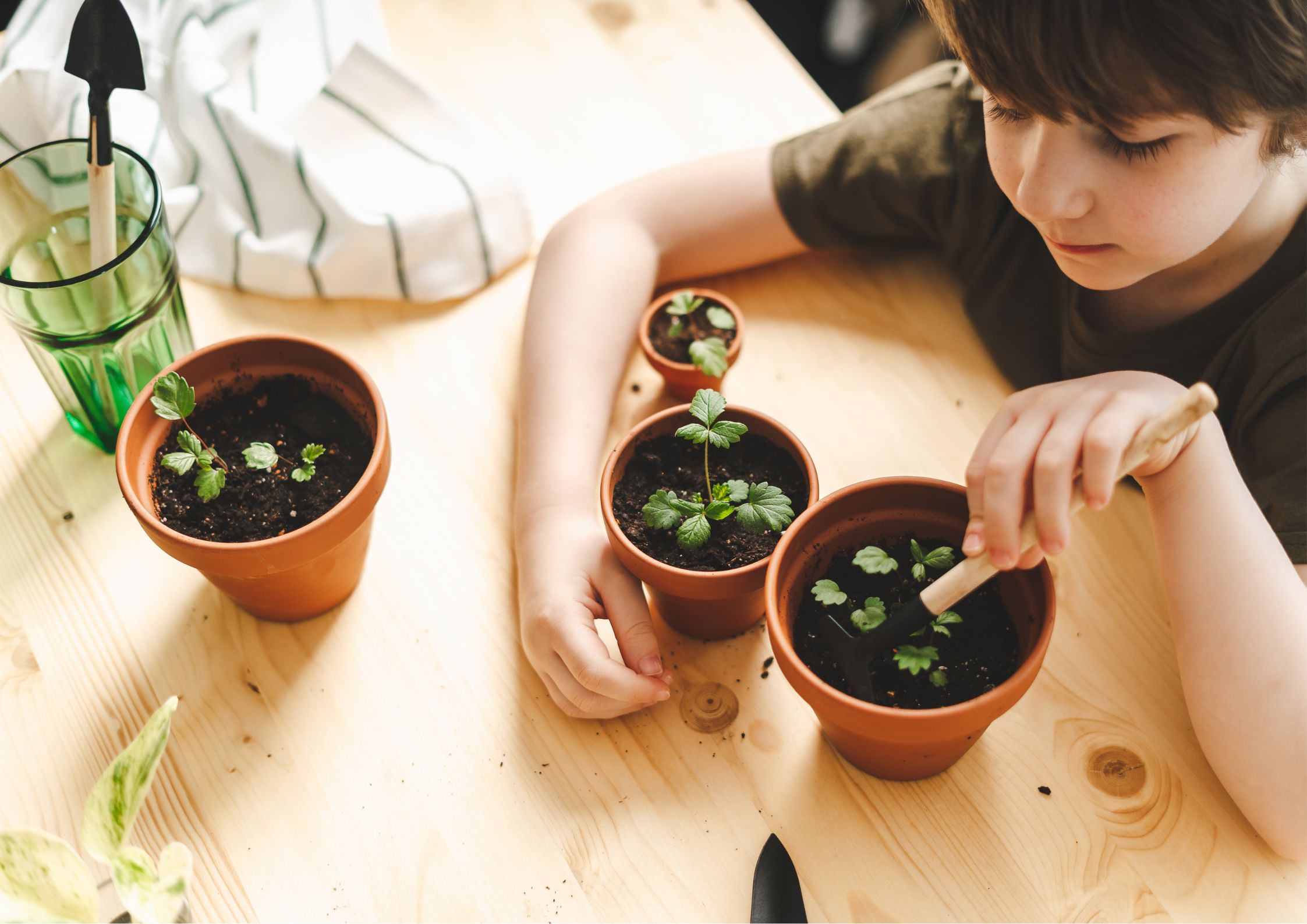
How do you introduce children to gardening? Many of you are eager to share this passion with your children and grandchildren. Gardening can benefit our young people in countless ways, at almost any age. And while they help with household tasks, such as weeding, they begin to understand and respect nature.
Gardening for the little ones at home
Once they start walking or crawling, they begin to discover areas like the garden, terrace or balcony. These spaces are the perfect place to develop their motor skills.
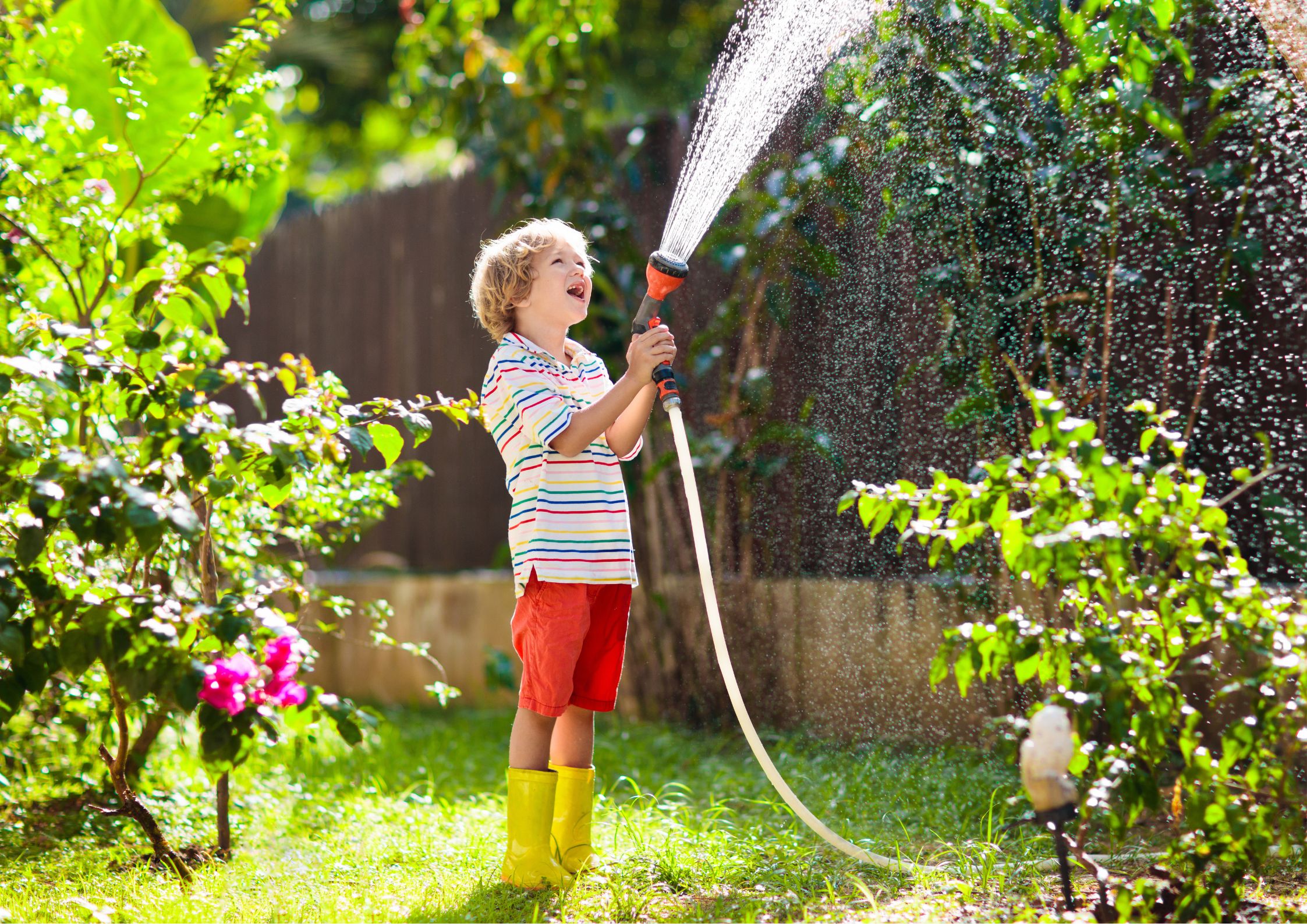
Children enjoy running through the sprinklers, jumping on dry leaves or rolling around on the lawn. By making the most of these activities, you'll have the chance to tick off tasks on your to-do list. Water the lawn or top up your pots with water with your little one by your side. Let them hold the hose or pick up the watering can; this way, they'll build strength and learn how to handle both, always with our help, as we don't want them to hurt themselves.
Also, we can teach them to use tools sized to fit their hands, such as trowels, which allows them to practise fine motor skills and coordination. Using tools like rakes can also help them develop strength and balance.
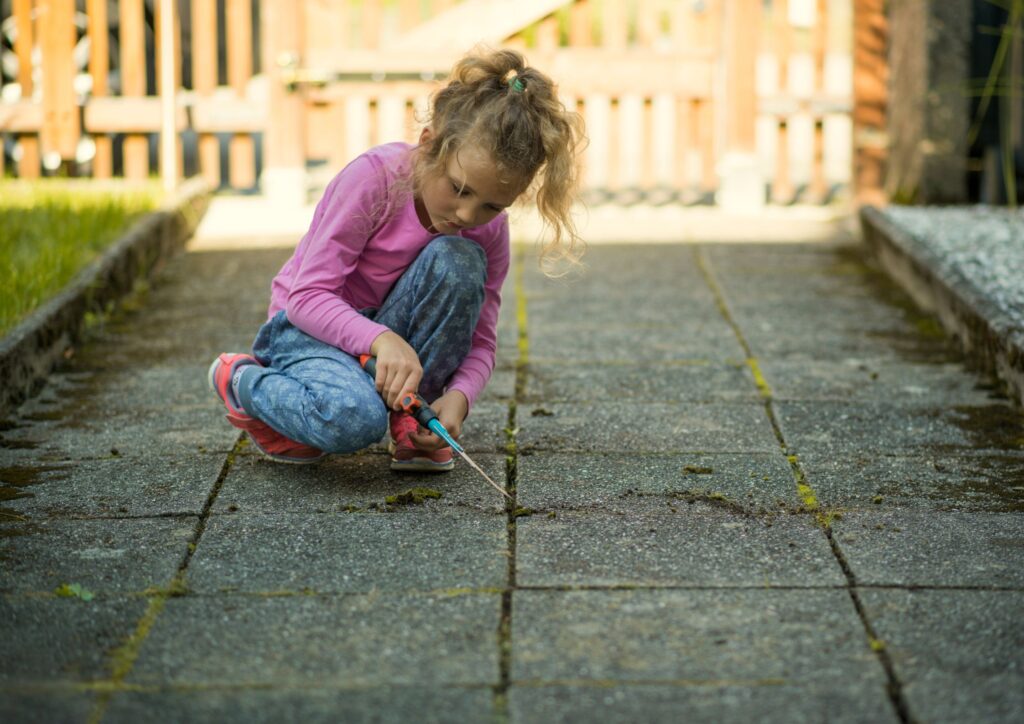
The garden or our pots can also be used as a visual calendar for young children: use it to reinforce the seasons, observing changes in temperature, blooms and stages of foliage. Meanwhile, leaves, soft soil and fragrant flowers contribute to the child’s ever-expanding sensory library.
Young children are developing their self-esteem and a healthy sense of pride. Creating small plans with goals and tasks and praising them for it can provide them with a valuable sense of achievement. When you come to Eiviss Garden, bring your little one and share the experience. Ask them what colours they would like to see in the garden or at home, and involve them in projects that can make them feel accomplished.
In primary school, most will learn the parts of a plant, its growth stages and the life cycle of a butterfly or a frog. When a lesson can leap from the textbook to a pot, it is learned more deeply and their brain will process it much better. We can also teach them to make compost naturally.
When they study climates, they will probably learn which plants are native and which are not, and how to care for them. Here we could also take the opportunity to connect the garden to the table, incorporating herbs, fruit and vegetables that they can enjoy.
Perhaps most importantly, planting a seed and waiting for the first leaf to sprout, for the plant to grow, for a flower to bloom, teaches children the gratification of waiting. When an activity shows children that rewards are sometimes best earned with patience, it reinforces a critical life skill.
Primary school students
If you have any questions about how to get started with these tasks, at Eiviss Garden we offer all kinds of seeds or urban gardens so your children can enjoy getting their hands dirty. You only need to ask our team and we will be delighted to advise you according to the season.