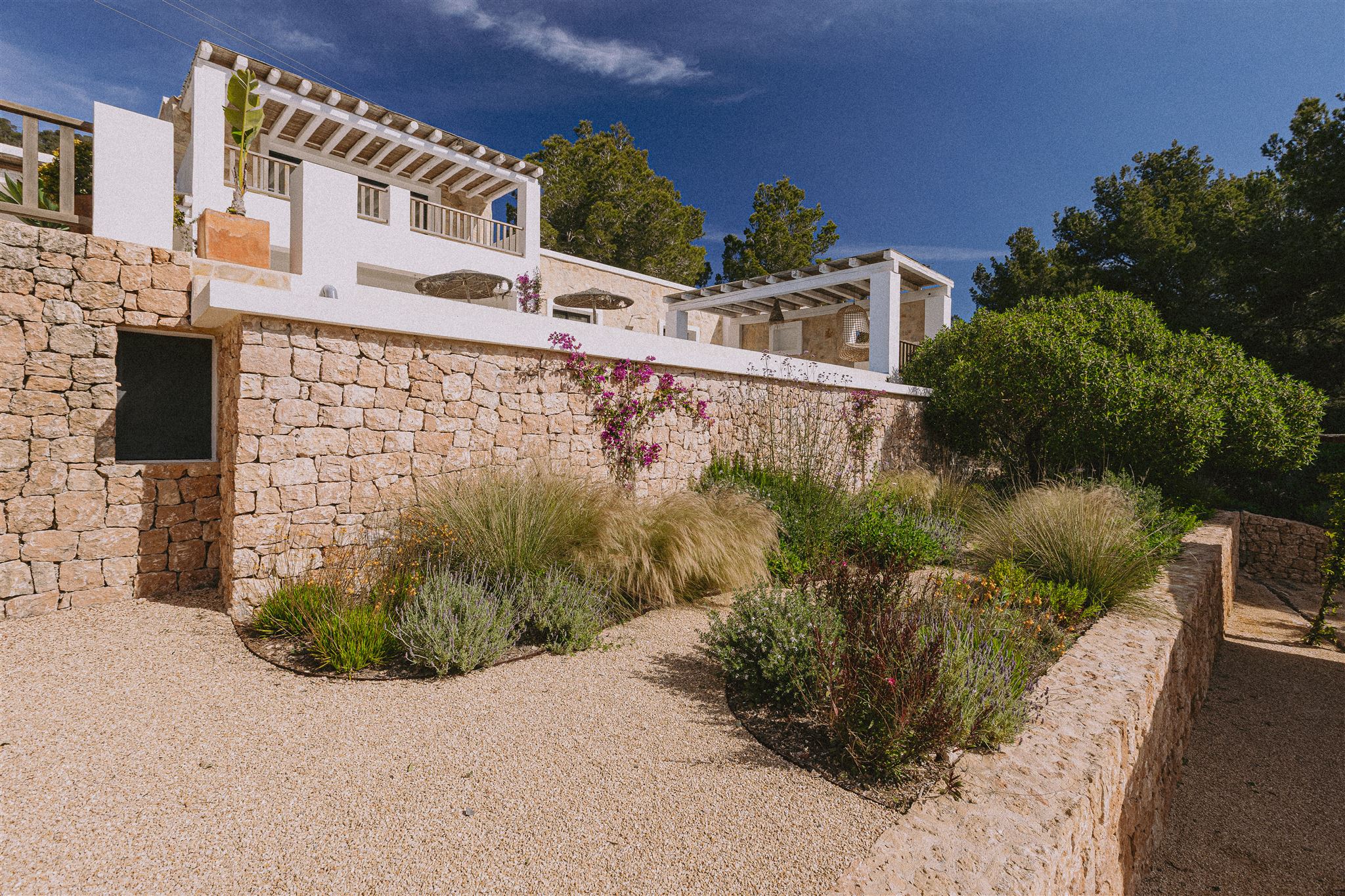
In a world where the effects of climate change are becoming increasingly visible —from more intense heatwaves to the disappearance of species and the degradation of soils— gardens are no longer just an ornamental space. But what is regenerative landscaping, and why is everyone talking about it? Today at Eiviss Garden, we introduce this new approach to garden design that seeks not only to beautify, but also to heal.
Much more than design
Regenerative landscaping is not a trend; it is a movement. Unlike traditional landscaping, which often focuses on surface aesthetics, perfect lawns and exotic plants with high water demands, regenerative landscaping has a more ambitious goal: restoring ecosystems and bringing health back to the soil.
This approach is inspired by natural cycles: it seeks to imitate the ecological intelligence already present in nature, where every plant, every microbe and every insect plays an essential role in balancing the system. Rather than imposing a design, it works with the land, its history and its potential to become fertile, biodiverse and resilient again.
What is regenerative landscaping based on?
Soil improvement: the starting point
Soil is a living organism, not just an inert support. In regenerative landscaping, the use of synthetic fertilisers is avoided, as they impoverish microbial life and contaminate water. Instead, natural compost, well-rotted manure and organic mulch are used to feed the underground food web. This improves soil structure, increases its water retention capacity and prevents erosion.
Use of native plants
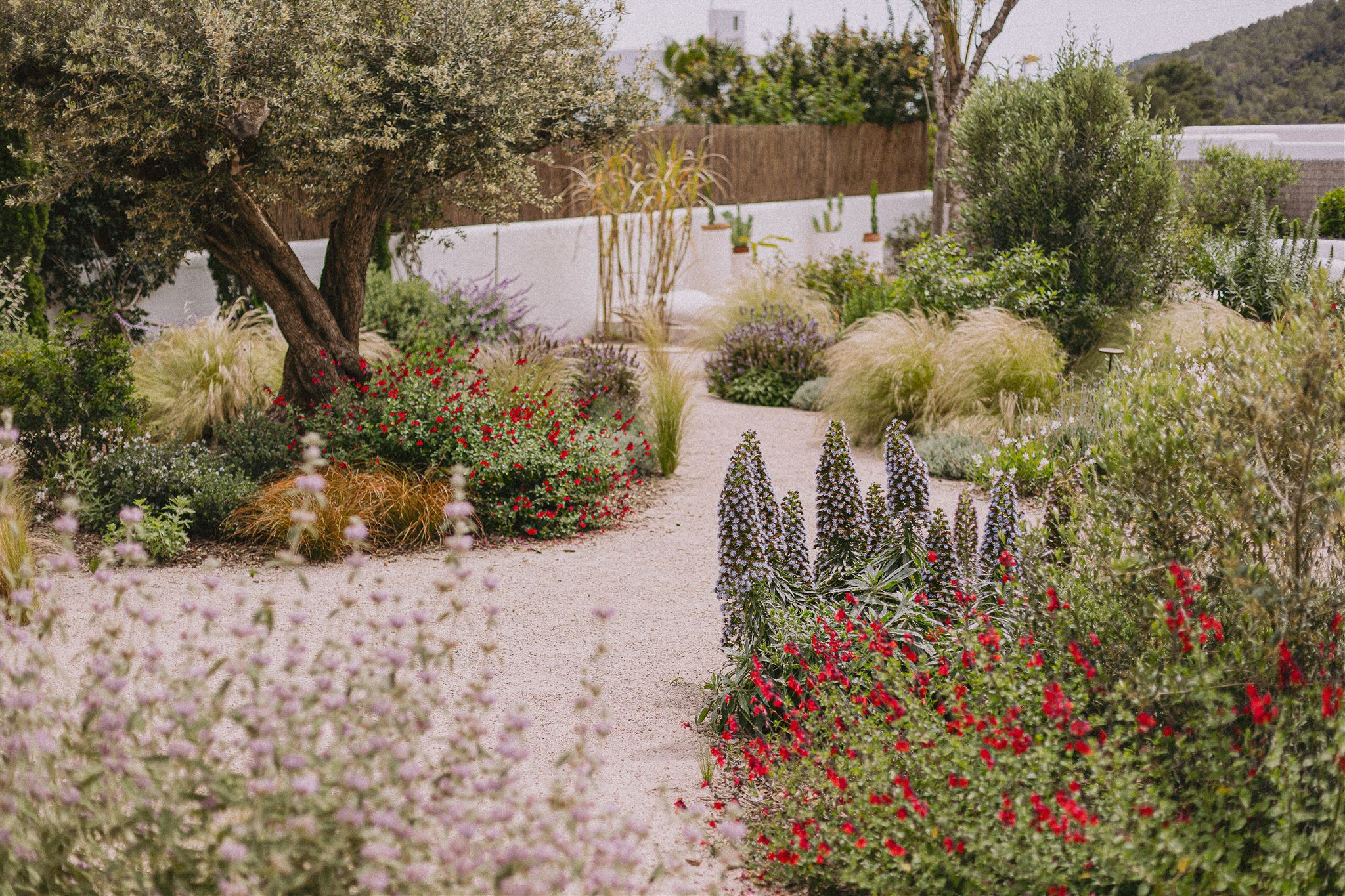
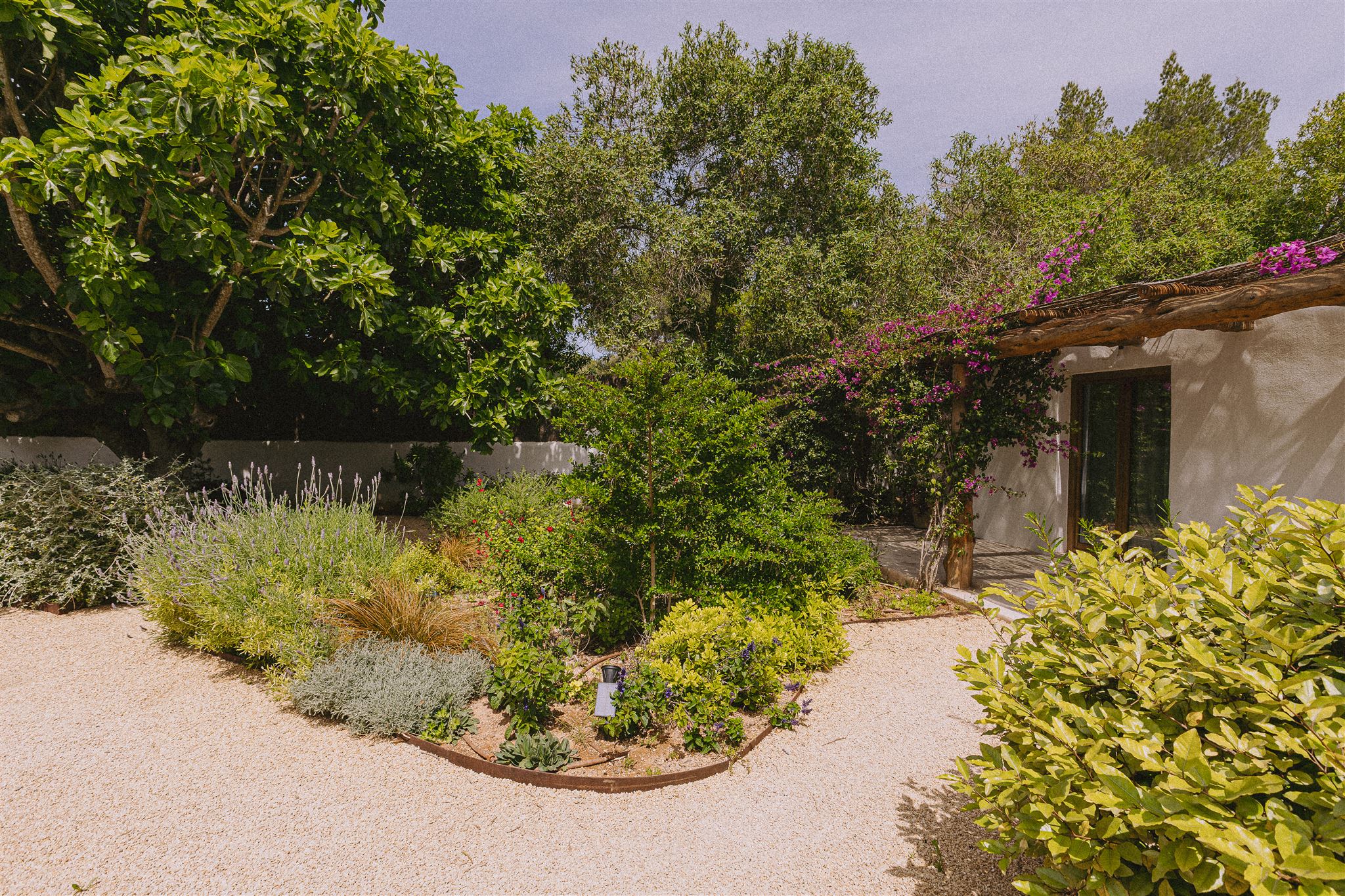
Native species, such as rosemary, lavender, mastic and olive trees, are adapted to the local climate and require less water and maintenance. They also provide shelter and food for local wildlife: bees, butterflies, birds and beneficial insects. By choosing them, you favour a more resilient, biodiverse and sustainable garden.
No chemicals
No pesticides, fungicides or harsh herbicides. We promote a more ecosystem-friendly form of biological control, using plant associations, natural predators and the rotation of ornamental crops. This helps avoid soil and water contamination, while also protecting the people who live there.
Water and carbon capture
A regenerative design makes use of the natural topography to collect rainwater and encourage infiltration, instead of letting it be lost to run-off. This not only saves water, but also recharges aquifers and reduces the risk of erosion. In addition, healthy soil covered with vegetation acts as a carbon sink, helping combat climate change from home.
A shift in mindset
Regenerative landscaping is not just a technique: it is a way of seeing the world. It is about understanding that we are not here to dominate nature, but to work alongside it. Caring for the soil, respecting natural rhythms and leaving space for wildlife is an act of ecological responsibility and also of love.
In a planet that needs urgent solutions, your garden — however small it may be — can make a difference. Every native flower, every square metre free of chemicals, every drop of water retained counts.
At Eiviss Garden, we believe another kind of gardening is possible. That is why we support you at every step with advice, locally sourced plants and landscaping projects that restore the connection between people and the land.
Come and visit us and let yourself be inspired. Because a living garden is a garden that cares for the planet.
Tags
what to do in the garden in July?
,
Organic fertilisation
,
Trees and shrubs for warm climates
,
June gardening tips
,
Summer lawn care
,
Growing flowers in summer
,
Gardening in Ibiza
,
Sustainable gardening
,
Indoor plant care
,
Watering optimisation
,
Mediterranean plants
Click to share on Facebook (Opens in a new window)
Click to share on Twitter (Opens in a new window)
Click to share on Pinterest (Opens in a new window)
Click to share on Tumblr (Opens in a new window)