Category:
Home-grown
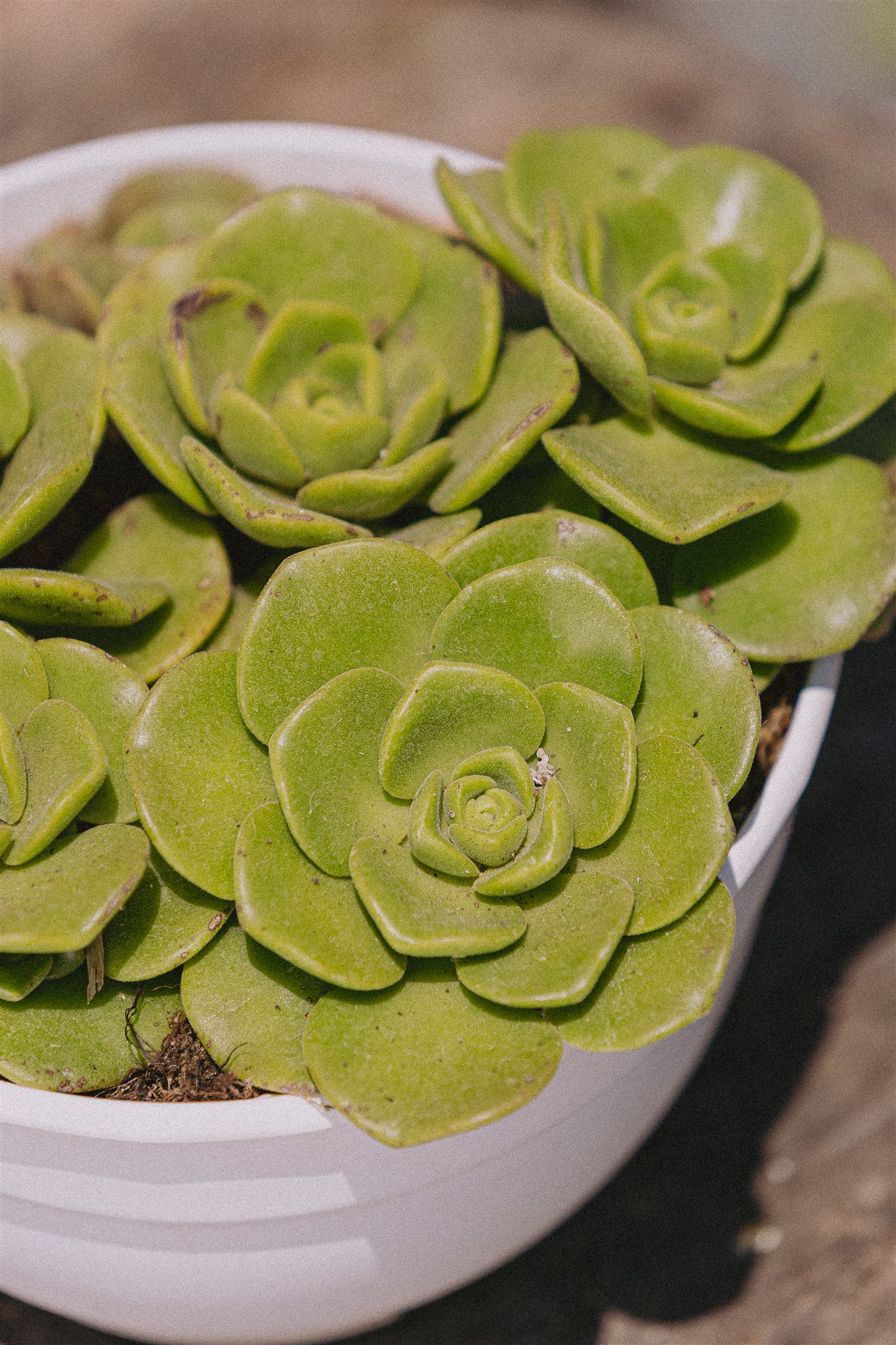
A succulent with highly decorative rosettes, ideal for pots and dry gardens, requiring little watering and offering a striking sculptural effect.
Approx. height
Approx. width
Light
Ideal temp.
Toxicity
Maintenance
Recommended watering
Sales format
Our experts say
Aeonium spp. brings together different species and varieties of aeonium, highly ornamental rosette succulents prized for their geometric form and sculptural presence. They form compact rosettes of fleshy leaves that can range from deep green to dark purple, and may even show variegation depending on the variety. Many develop stems over time, creating a branching structure that adds volume and a highly decorative look in pots or in the garden.
They are particularly interesting plants because, in mild climates, they tend to put on their best growth in the cooler, temperate seasons, keeping a neat and tidy appearance with very little maintenance. They work beautifully in arrangements with other succulents, rock gardens, designer pots and low-water areas, where they provide contrast in form and colour all year round.
Image gallery
Benefits
Very high ornamental value thanks to its rosette shape and sculptural appearance.
Ideal for gardens and low-water pots.
A wide variety of colours and forms for decorative arrangements.
Minimal maintenance with excellent results if drainage is adequate.
Easy to propagate and reuse in new pots or corners of the garden.
Special care
They require very free-draining substrate; avoid heavy soils and excess moisture.
Plenty of light: gentle sun or bright partial shade; some varieties tolerate direct sun, but strong summer sun can mark or scorch leaves.
Low watering: water only when the substrate is completely dry; reduce greatly in winter or during cold, damp periods.
In pots, use cactus/succulent mix or universal potting mix with sand/perlite to improve drainage.
Remove dried rosettes or leaves to keep the plant tidy and prevent problems.
Protect from frost: they are sensitive to severe cold.
They propagate easily from cuttings; let the cut dry before planting to avoid rot.