Category:
Home-grown
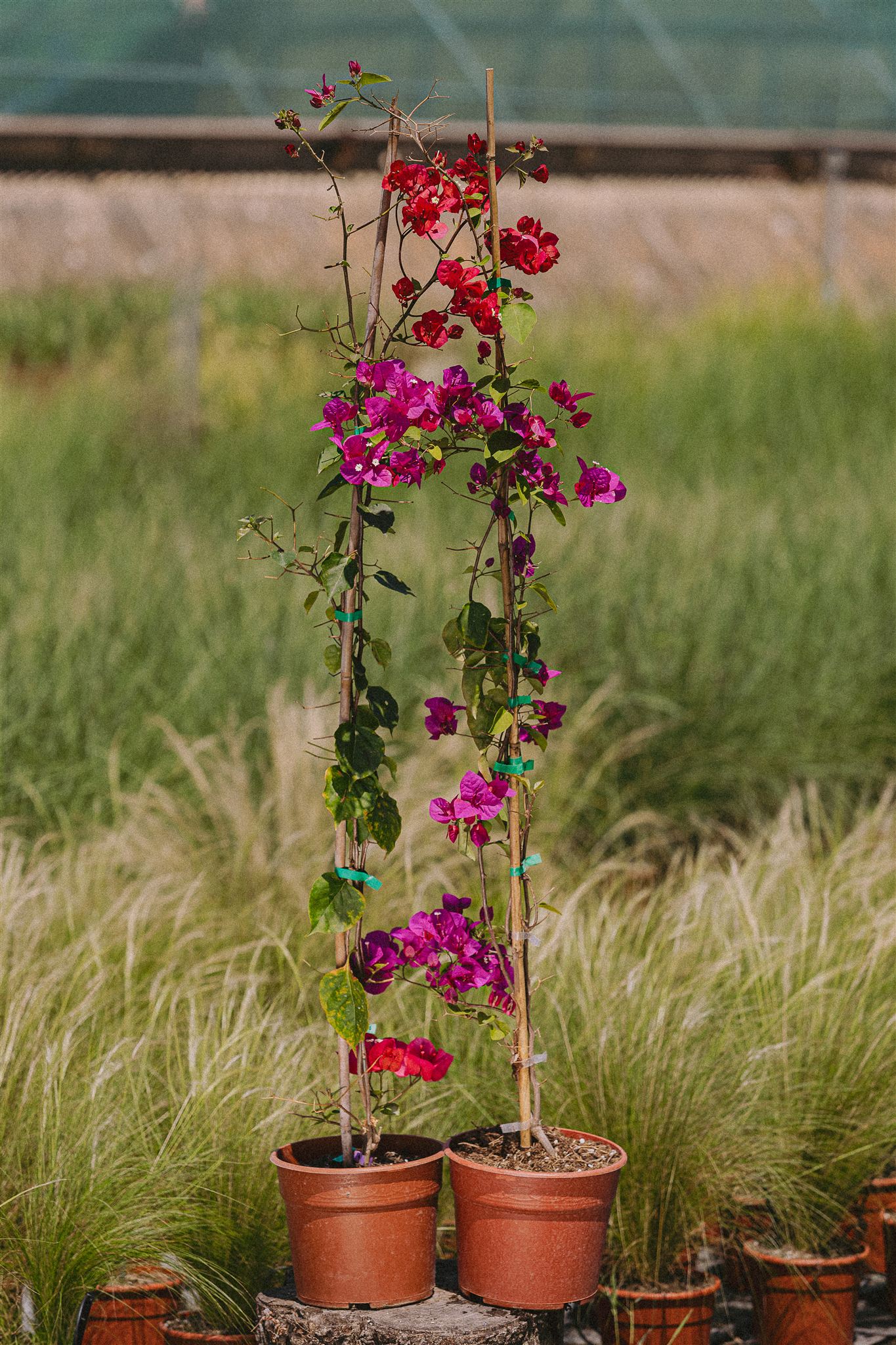
A striking Mediterranean climber, resistant to sun and heat, ideal for walls and pergolas, with very showy seasonal flowering.
Approx. height
Approx. width
Light
Ideal temp.
Toxicity
Maintenance
Recommended watering
Sales format
Our experts say
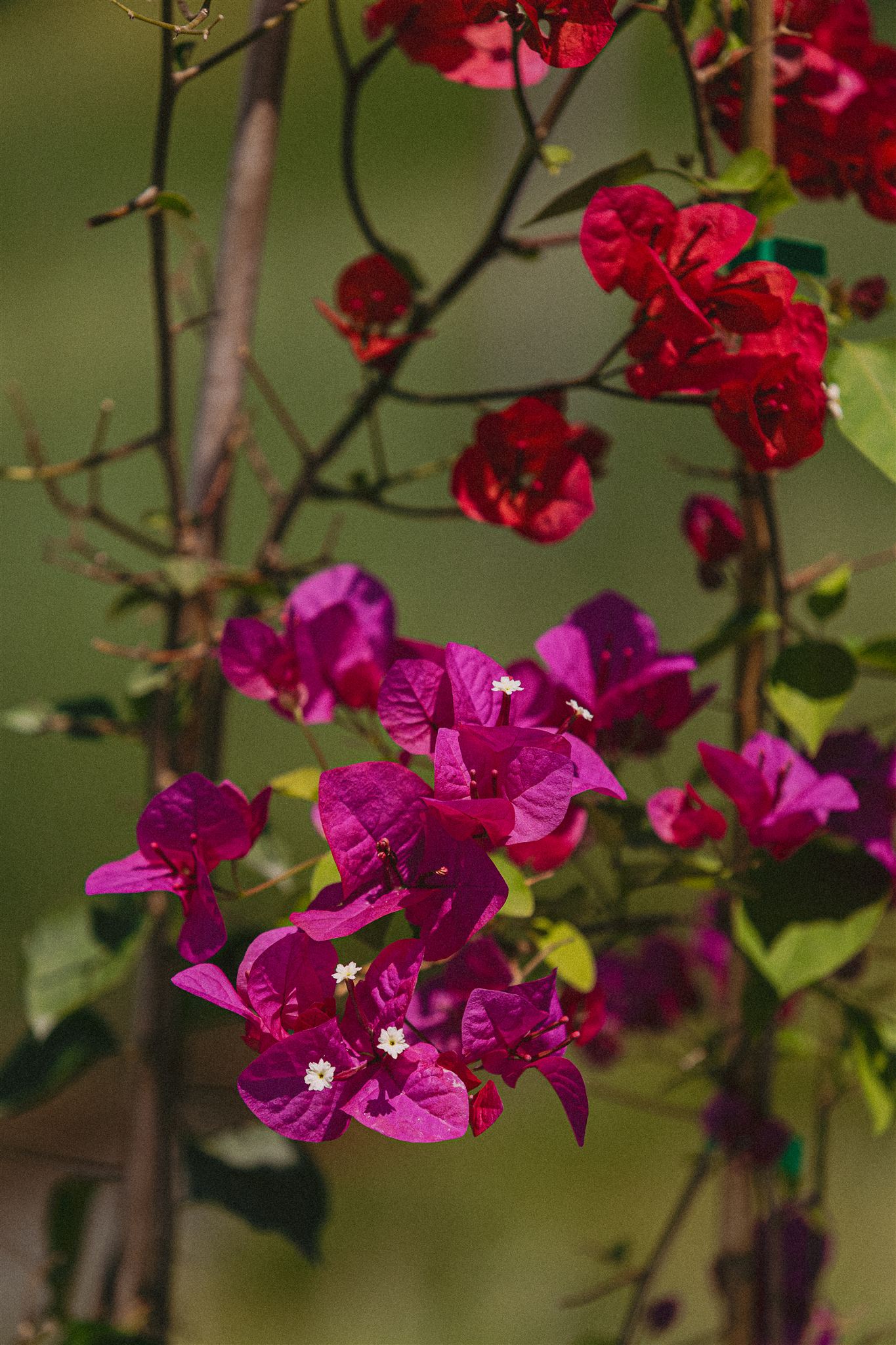
The Bougainvillea spectabilis is a highly ornamental climber, known for its abundant flowering and its ability to transform walls, pergolas and lattice panels into true cascades of colour. What is usually perceived as a “flower” is in fact paper-like bracts surrounding small white flowers, and they can appear in shades of fuchsia, purple, red, orange or white depending on the variety. Its growth is vigorous and, with support, it can cover large areas, bringing shade, privacy and a very distinctive Mediterranean feel.
It is a plant that responds especially well to sun and warmth: the more sun it receives, the more it flowers. Once established, it tolerates periods of drought and needs little maintenance beyond pruning to keep it in check. It also performs very well in a pot, provided it is given a spacious container and a structure to climb on, making it a standout feature for terraces or patios.
Image gallery
Benefits
Spectacular, long-lasting flowering throughout the warm season.
Ideal for covering walls, pergolas and trellises, providing shade and privacy.
Very heat-tolerant and drought-tolerant once established.
Perfect as a statement plant in the garden or a large pot.
Adds strong ornamental value with reasonable maintenance (pruning and irrigation control).
Special care
Needs full sun to flower abundantly; with less light, flowering is greatly reduced.
Requires a very free-draining substrate; excess water and waterlogging are its main problem.
Moderate watering in the first year and in summer; after that, low, spaced watering, allowing it to dry out between waterings.
Prune to control size and encourage flowering shoots; pruning is usually done in late winter or after the main flowering.
Provide support (trellis, pergola, wires) and guide the young stems.
Sensitive to cold: protect from frost and, if it is in a pot, shelter it during cold spells.
Wear gloves when handling it: it may have thorns and stiff stems.