Category:
Home-grown
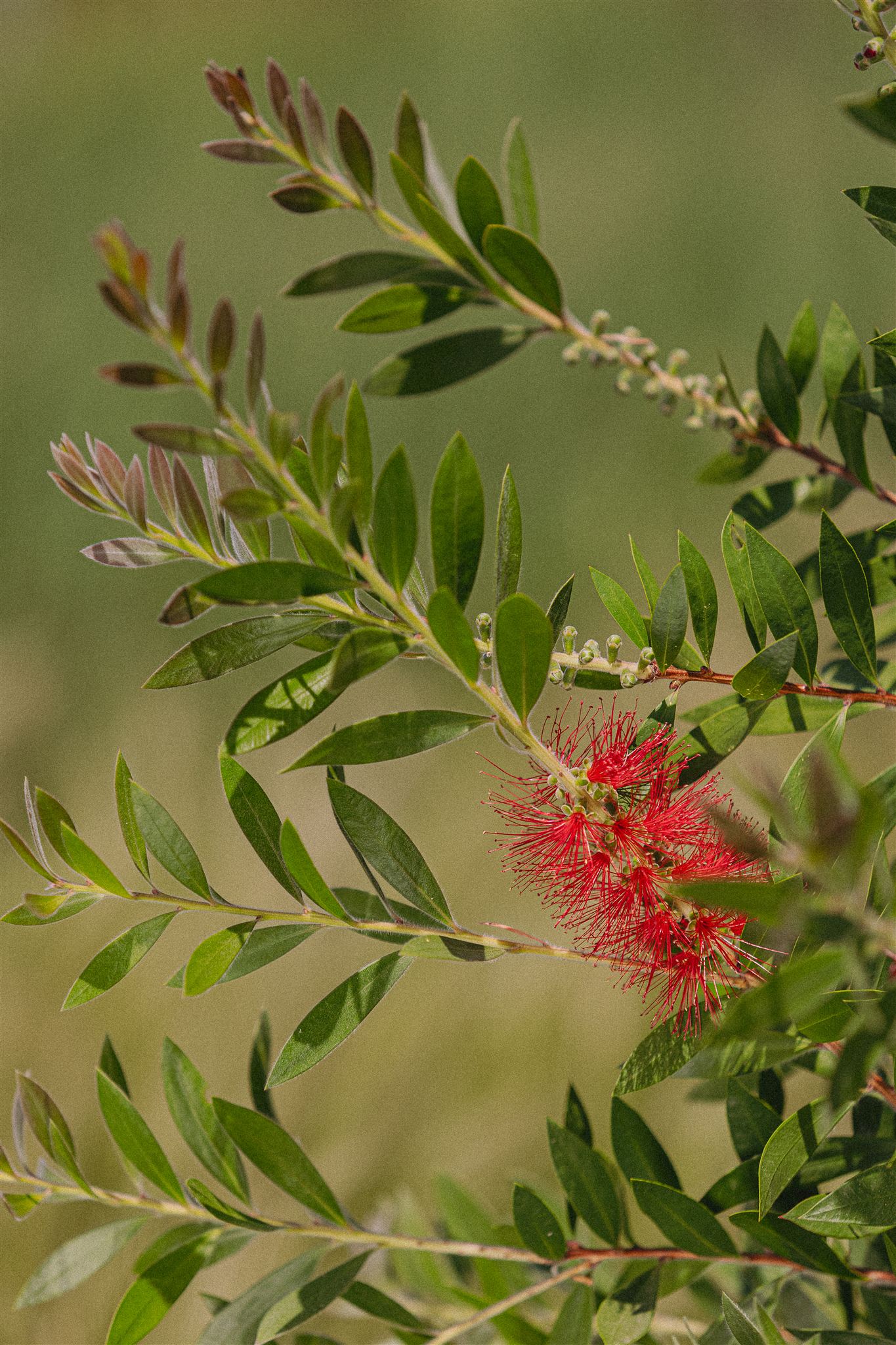
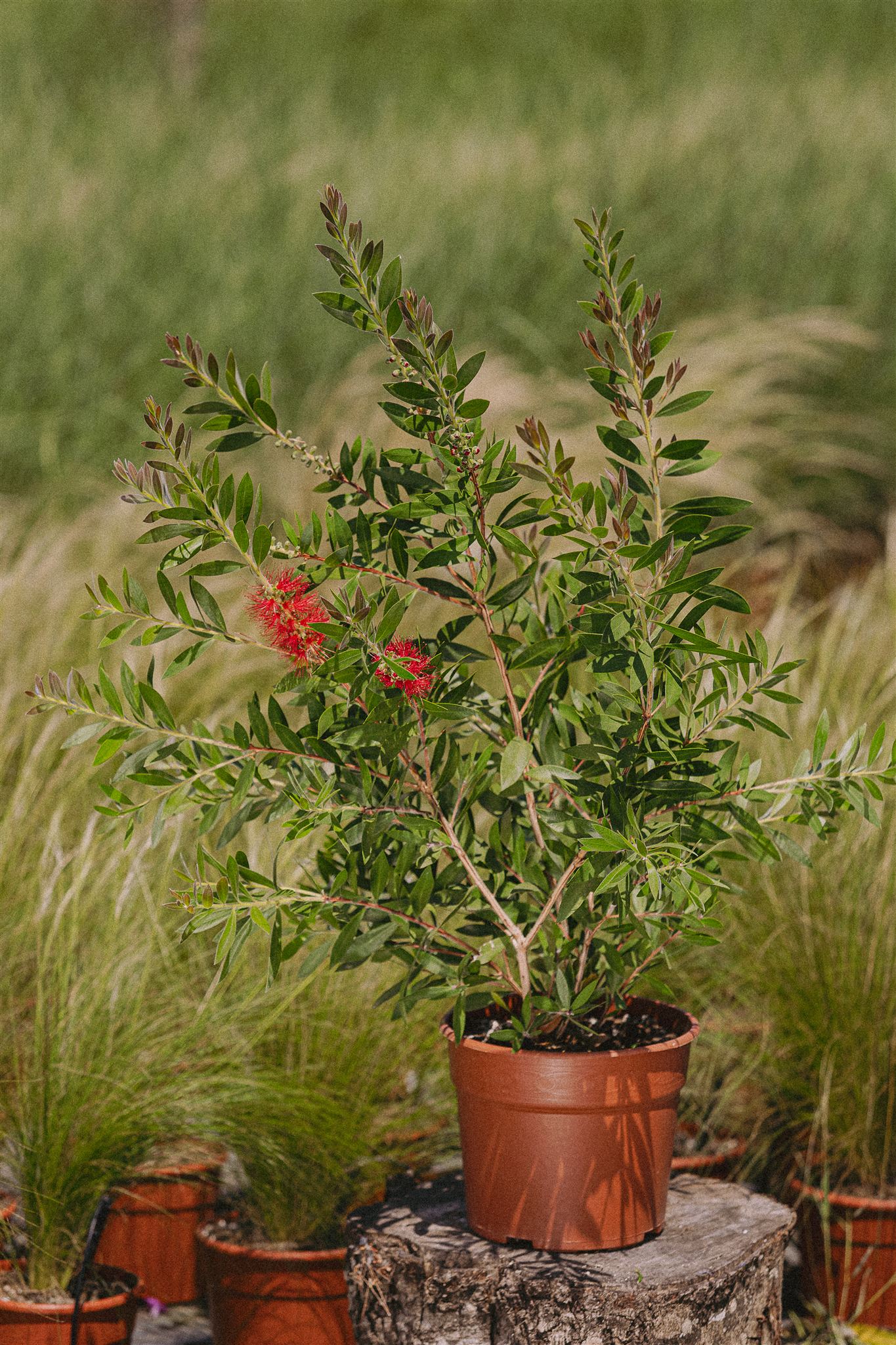
A highly ornamental shrub or small tree, with red brush-like blooms and excellent heat resistance, ideal for adding colour and structure to sunny areas.
Approx. height
Approx. width
Light
Ideal temp.
Toxicity
Maintenance
Recommended watering
Sales format
Our experts say
The bottlebrush tree (Callistemon laevis) is a very ornamental evergreen shrub or small tree, known for its striking bottlebrush-like flowering, made up of numerous bright red stamens. These flower spikes appear in spring and can repeat in waves if the plant is well sited and cared for, bringing a strong splash of colour without demanding much in return. Its foliage is dense, with narrow green leaves, and forms a branched structure that works well both as a standalone specimen and in rows or green screens.
It is a species especially valued for its tolerance to heat, wind and salinity, which makes it very suitable for exposed gardens and coastal areas. With good drainage and light pruning, it can be kept compact or allowed to grow as a small tree with a more open crown.
Image gallery
Benefits
Highly ornamental and distinctive flowering, with strong visual impact.
Attracts pollinators and brings life to the garden.
Tolerant of heat, wind and saline conditions.
Versatile: can be used as a large shrub or small tree, depending on pruning.
Provides green structure all year round with reasonable maintenance.
Special care
Place in full sun for more abundant flowering; in partial shade it blooms less.
Needs well-drained soil; it tolerates different soil types, but not prolonged waterlogging.
Moderate watering: regular during the first year and in summer; afterwards, more spaced-out watering.
Prune after flowering to maintain shape and encourage new blooms; removing dried flower heads improves regrowth.
Appreciates a light feed in spring if greater vigour and flowering are desired.
In a pot, use a large container and monitor watering in summer to avoid drought stress.
Keep an eye out for mealybugs or aphids in warm periods; this is usually prevented with good ventilation and balanced watering.