Category:
Home-grown
Large-flowering, long-blooming climber, ideal for terraces and pergolas, with a tropical look and a very rewarding flowering display in the warmer season.
Approx. height
Approx. width
Light
Ideal temp.
Toxicity
Maintenance
Recommended watering
Sales format
Our experts say
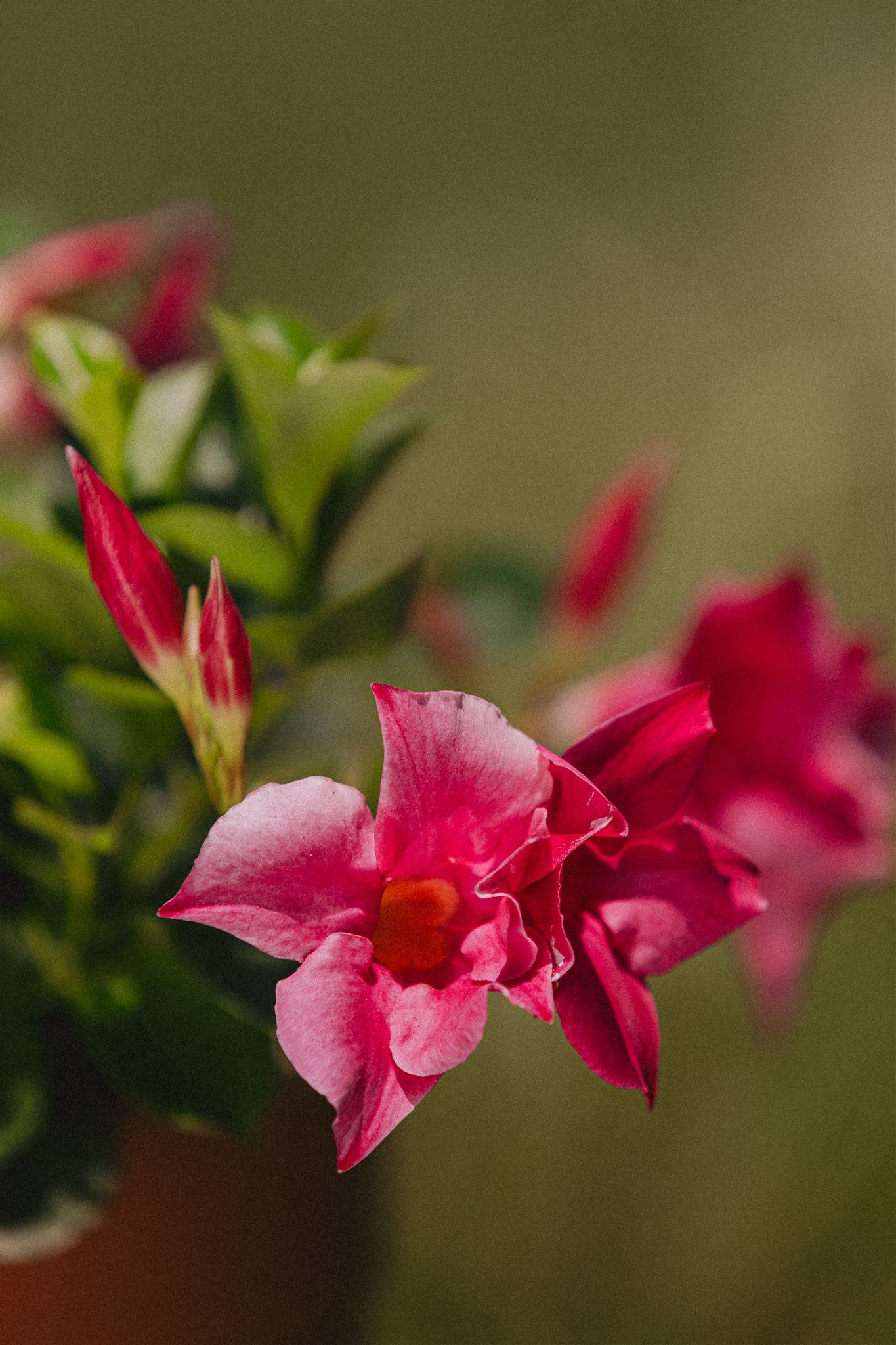
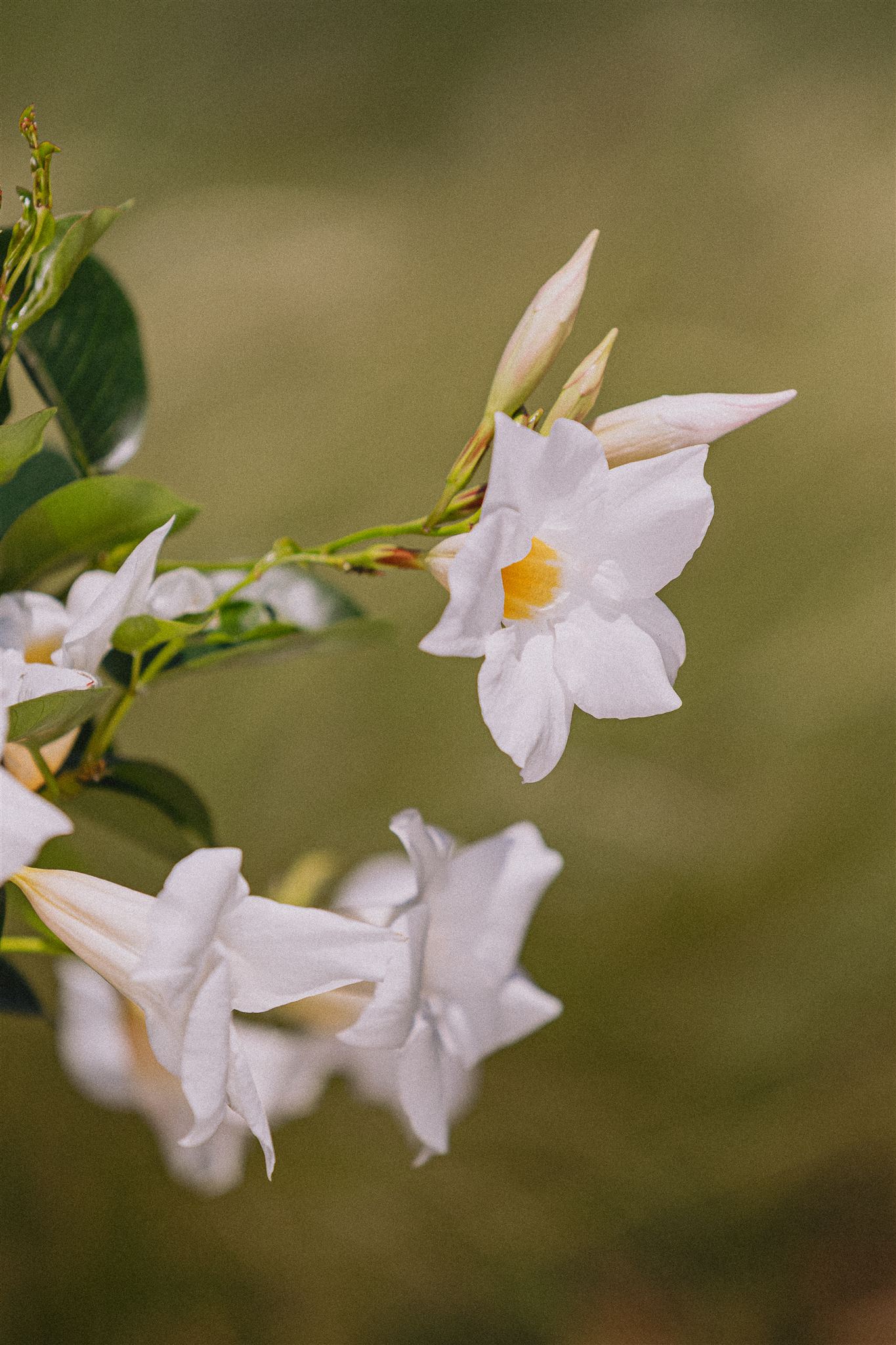
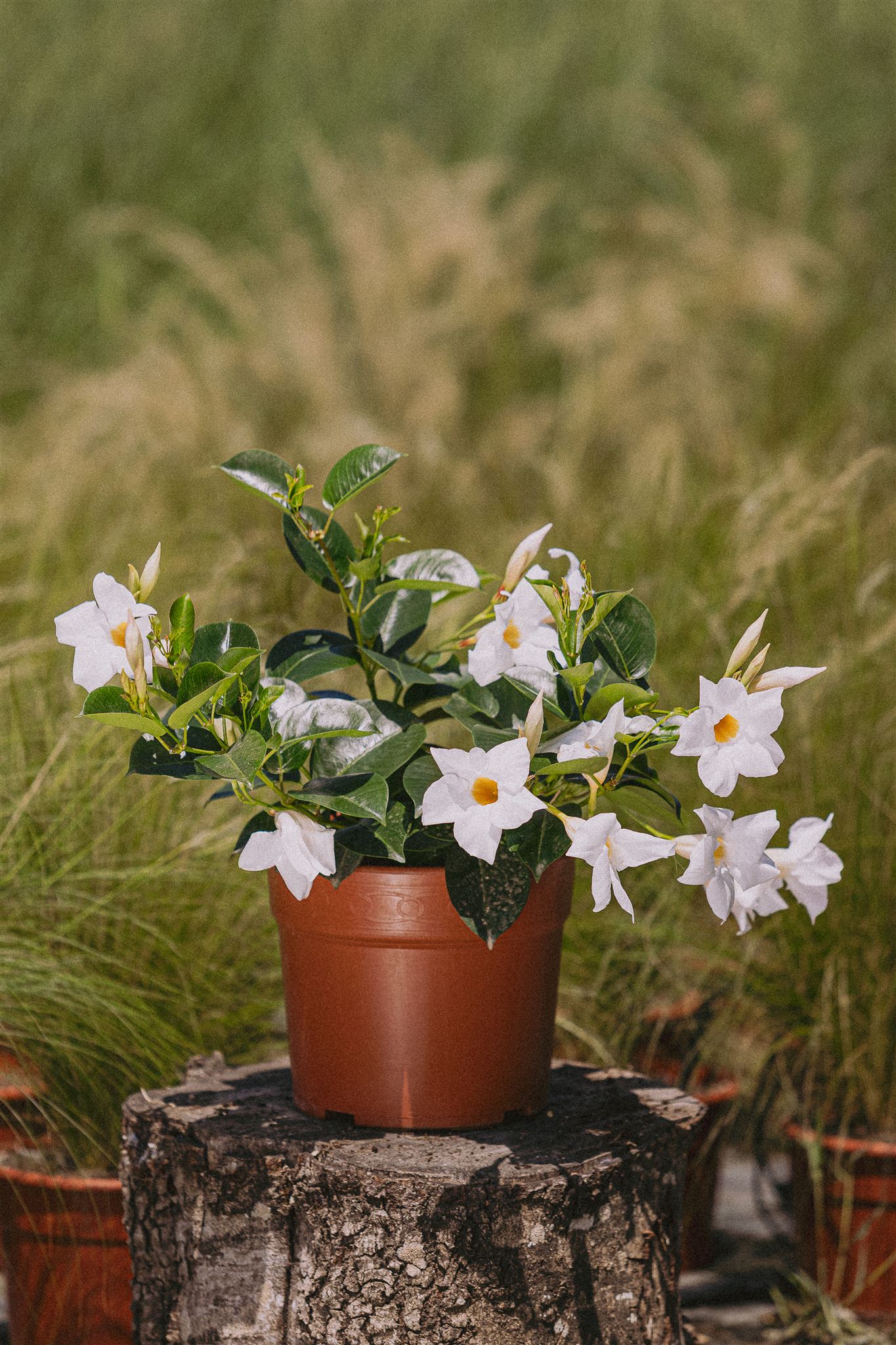
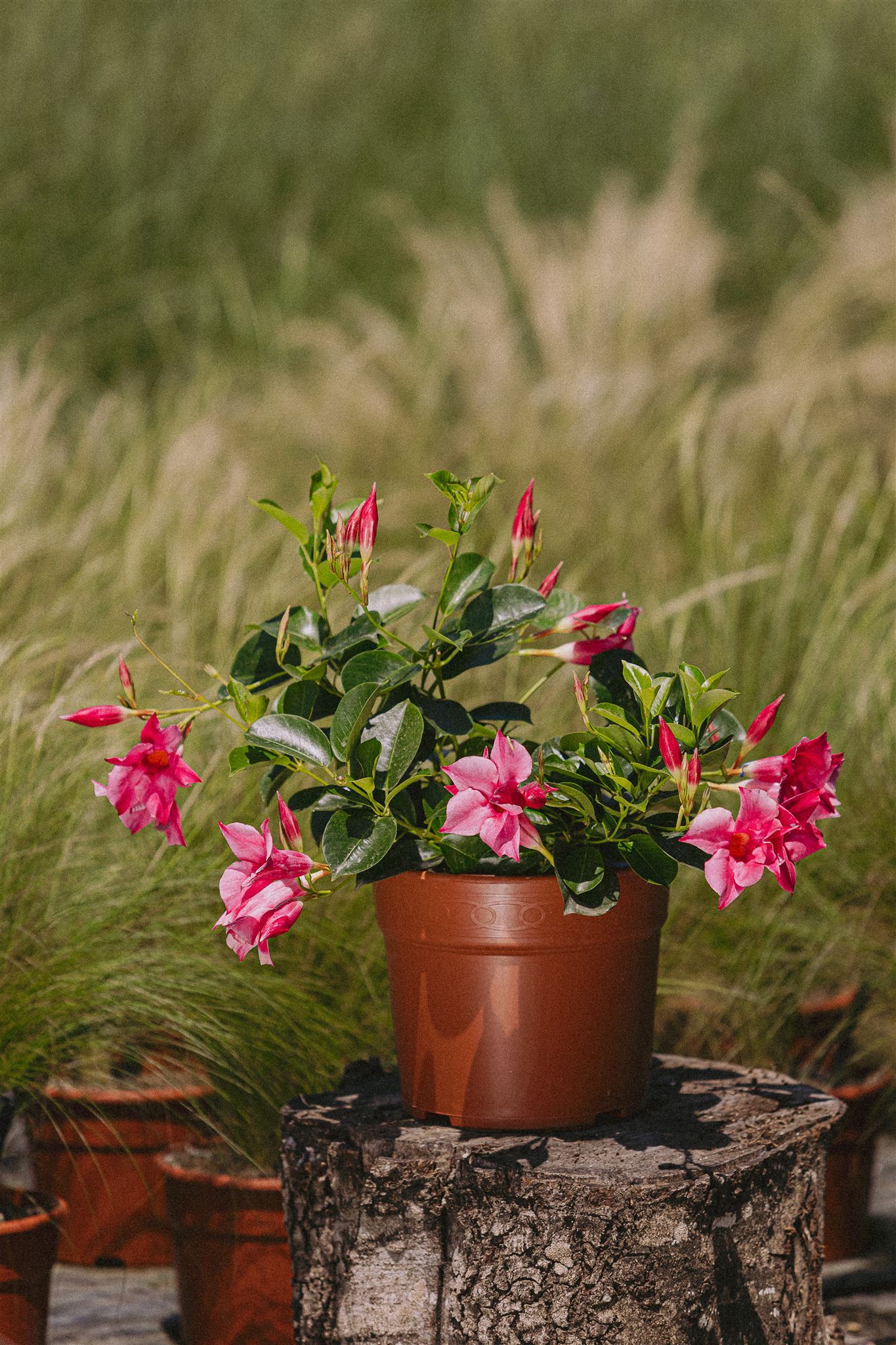
The hybrid dipladenia (Mandevilla, commercially “Dipladenia”) is a highly valued ornamental climber, appreciated for its abundant and long-lasting flowering, with large trumpet-shaped flowers that can be white, pink, red or fuchsia depending on the variety. It has an elegant, compact form when trained on a support, or a more trailing habit if allowed to spill over from tall pots, which makes it very versatile for terraces, balconies, trellises and pergolas.
It is a plant with a tropical look but, surprisingly, it is hardy in warm climates. With good light and balanced watering, it blooms for months and keeps a bright green foliage that brings a sense of freshness. It is ideal for those looking for a showy flowering climber, with reasonable maintenance and a highly decorative result.
Image gallery
Benefits
Large, eye-catching blooms for much of the warm season.
Perfect for terraces, balconies and pergolas, as a climber or trailing plant.
Brings a tropical feel with bright green foliage and a neat, well-kept look.
Responds very well to feeding and pruning, staying compact and floriferous.
Ideal for creating privacy and vertical colour with manageable maintenance.
Special care
Needs plenty of light; ideal in gentle sun or bright partial shade. In very hot places, protect it from the harsh midday sun to avoid stress.
Moderate watering: keep the growing medium slightly moist while flowering, allowing the top layer to dry out between waterings; avoid waterlogging.
Good drainage and a pot with holes are essential; do not leave water collected in the saucer.
Appreciates a support or structure to guide its growth (trellis, cane, arch).
Feed every 2–3 weeks in spring and summer with fertiliser for flowering plants.
Does not tolerate frost; below 10 ºC it should be protected or sheltered if it is in a pot.
Prune at the end of winter or at the start of spring to keep it compact and encourage new flowering shoots.
Watch out for scale insects, aphids and red spider mite in dry conditions; improve ventilation and ambient humidity.