Category:
Home-grown
An evergreen shrub that is highly resistant to heat and drought, ideal for hedges and screens, with abundant flowering and a strong presence in Mediterranean gardens.
Approx. height
Approx. width
Light
Ideal temp.
Toxicity
Maintenance
Recommended watering
Sales format
Our experts say
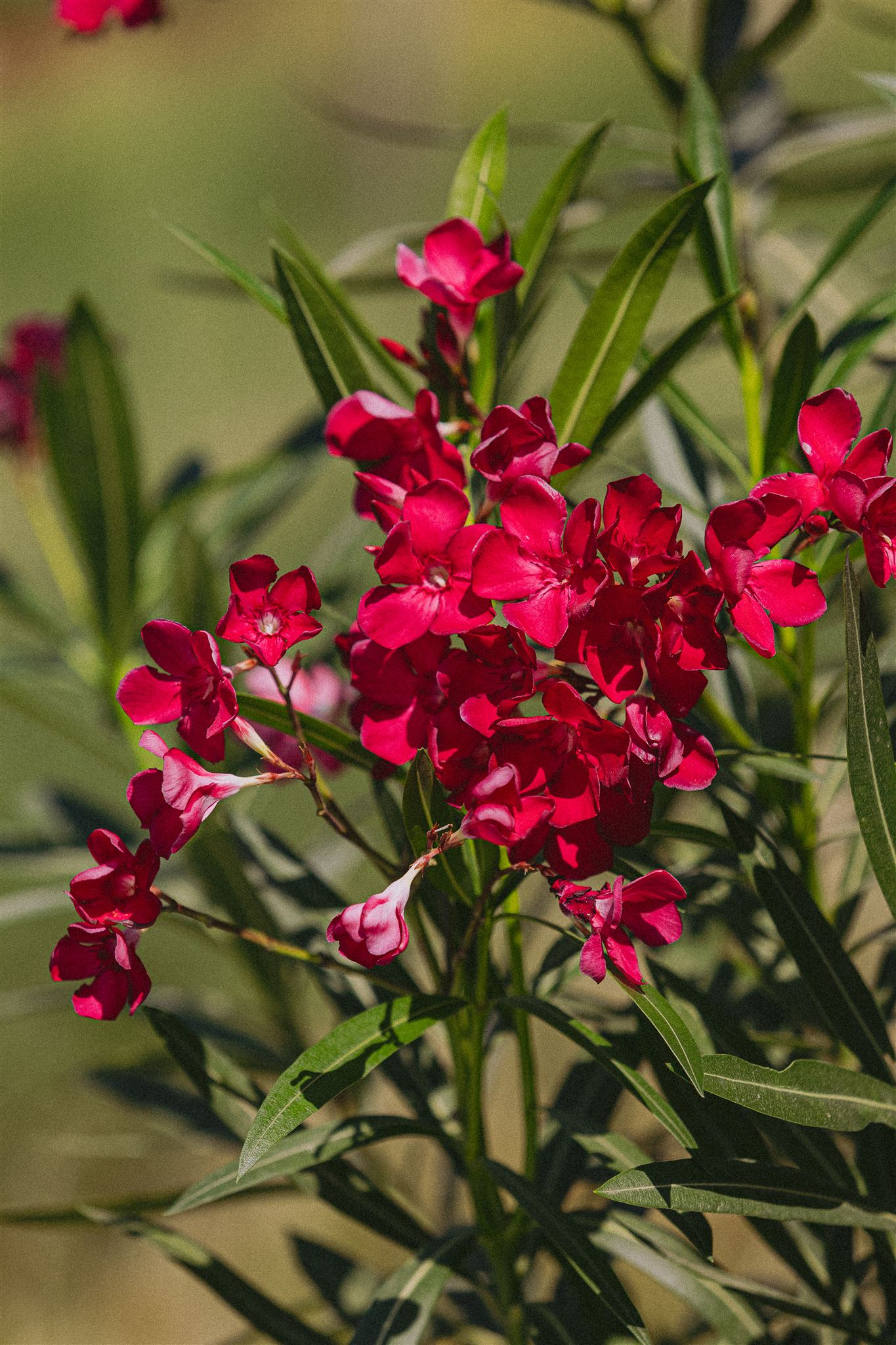
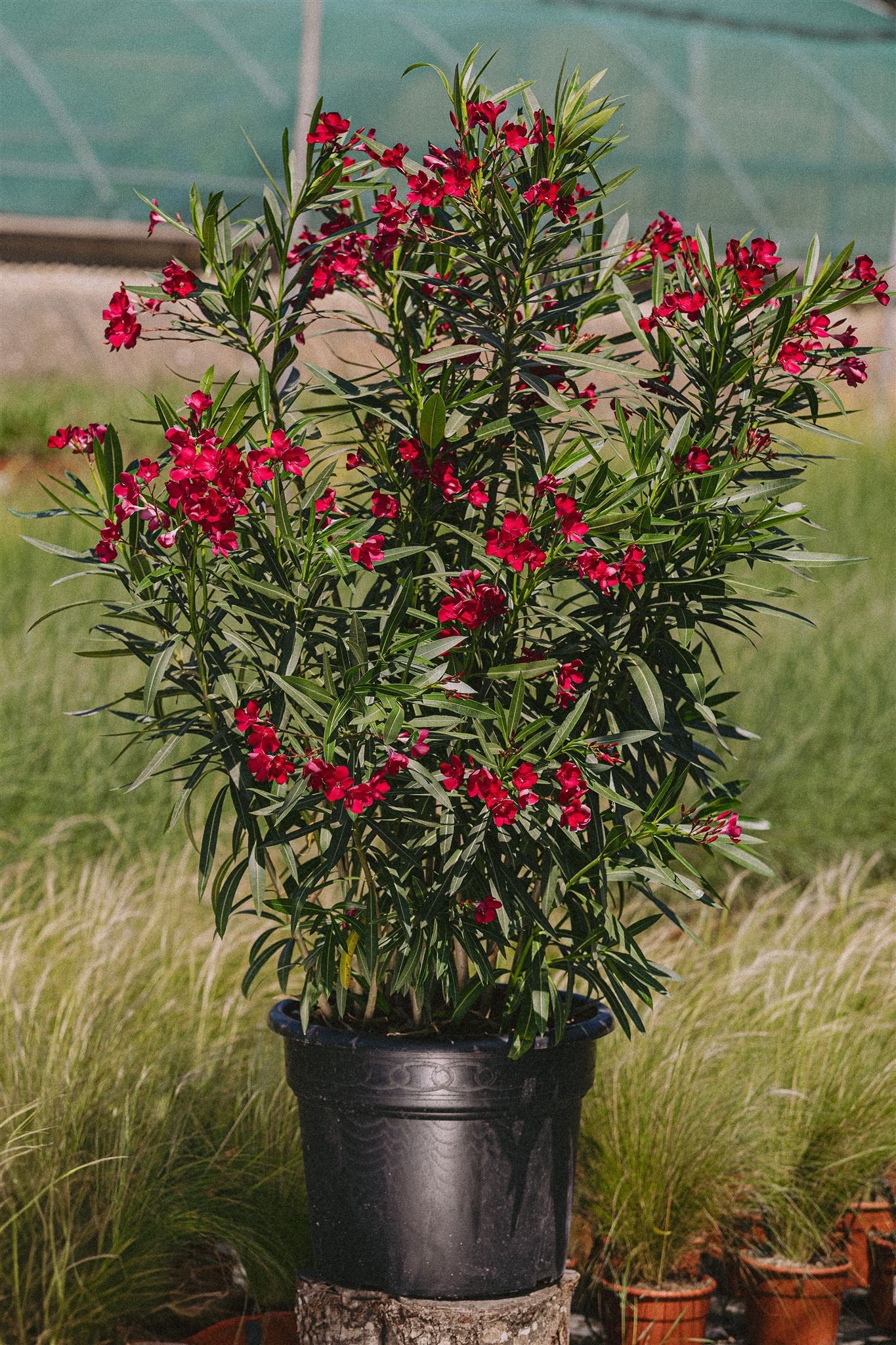
The Oleander or Baladre (Nerium oleander) is a highly ornamental evergreen shrub, known for its abundant and prolonged flowering and exceptional resilience. It forms dense clumps, with long, leathery deep-green leaves, and produces clusters of flowers (white, pink, red or salmon, depending on the variety) throughout the warmer months, maintaining a lush, structured look all year round.
It is a plant especially valued in low-maintenance gardens for its ability to withstand heat, drought, wind and saline conditions once established. It works very well as a hedge, screening plant, backdrop for borders or as a stand-alone specimen, and responds well to pruning if size control or increased density is needed. In suitable soil and full sun, it grows vigorously and offers a very “clean” and architectural presence.
Image gallery
Benefits
Very long, showy flowering throughout the warm season.
Very hardy shrub once established, tolerant of heat, drought and wind.
Ideal for hedges and screens thanks to its dense, well-structured growth.
Tolerates coastal environments and some salinity.
Adds volume and colour with little maintenance.
Responds well to pruning, allowing shape and size to be controlled.
Attracts pollinators during flowering.
Special care
Very high toxicity: all parts of the plant are toxic if ingested; keep away from children's play areas or places where pets that chew plants may be present.
Full sun to bloom well: in partial shade it grows, but flowers less and becomes leggy.
Moderate watering at first: during the first year, water regularly so it establishes roots; afterwards it tolerates low watering, although it flowers more with some water in summer.
Free-draining soil: it does not like constant waterlogging; in heavy soils, improve drainage.
Prune with gloves: the sap may irritate; prune after flowering or at the end of winter to form a hedge or rejuvenate.
Control common pests: watch for mealybug and aphids; in humid environments powdery mildew may appear.
Handling pruning waste: do not use as material for domestic fires or barbecues; handle and dispose of carefully because of its toxicity.