Category:
Home-grown
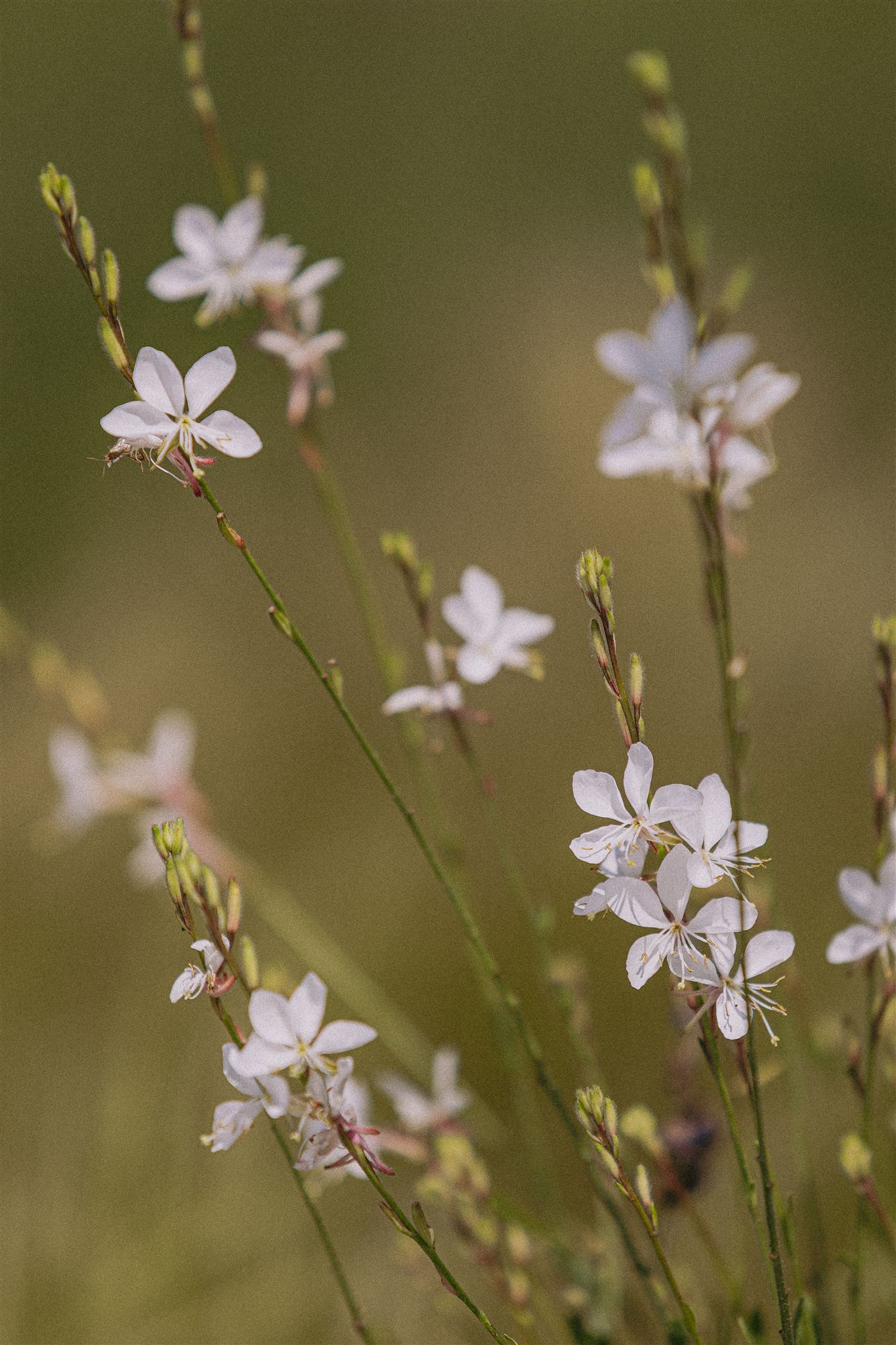
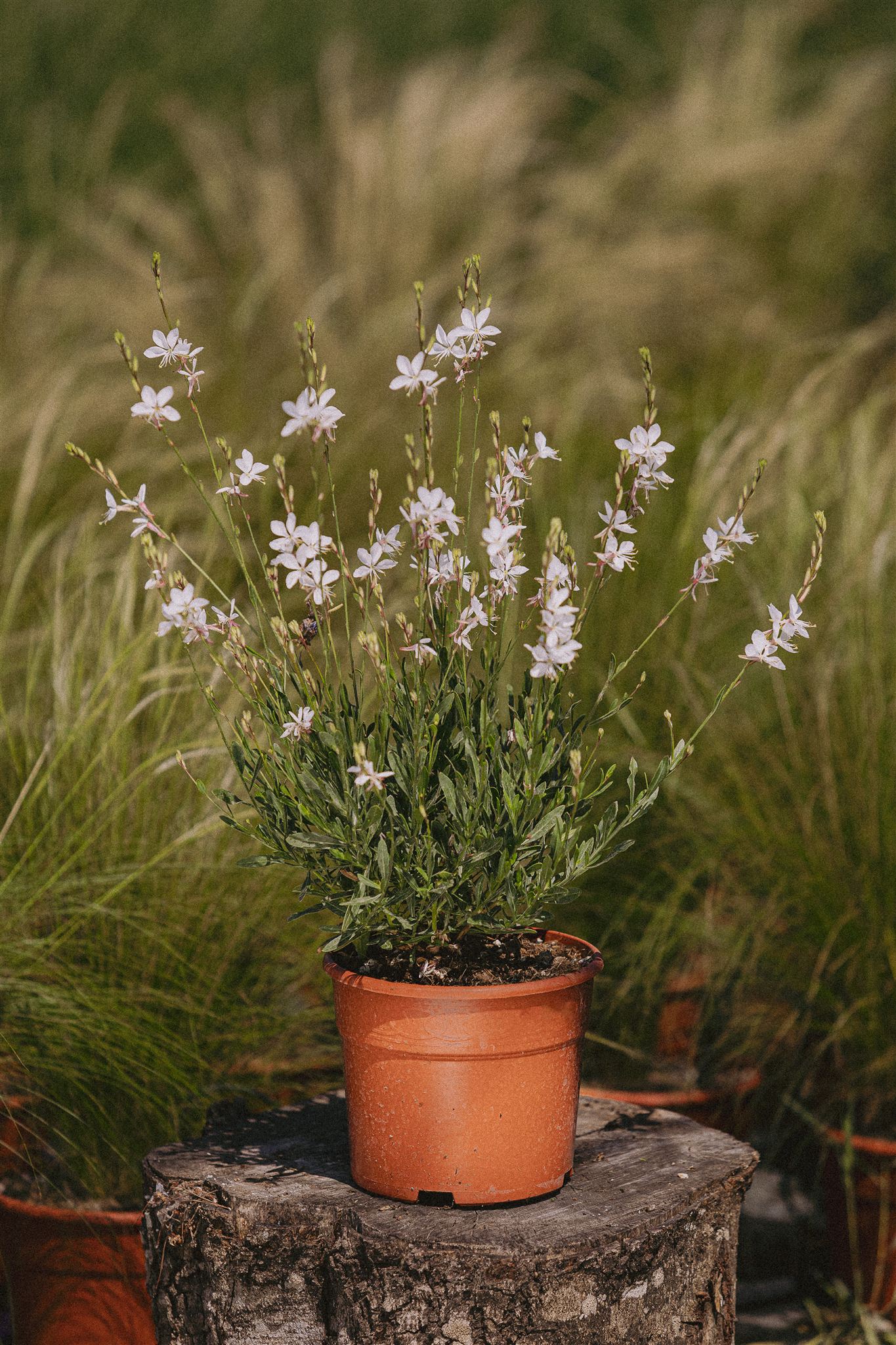
A light, very floriferous perennial with delicate butterfly-like flowers that bring movement, ideal for natural gardens, pots and sunny borders.
Approx. height
Approx. width
Light
Ideal temp.
Toxicity
Maintenance
Recommended watering
Sales format
Our experts say
The Gaura (Oenothera lindheimeri) is a perennial with a light, wild-looking appearance, known for its long flowering period and slender stems that move in the wind. Its flowers, white or pink depending on the variety, appear in small spikes and open in stages, creating a very natural effect, like “butterflies” floating above the plant. It is an ideal species for adding height and transparency in the garden, without creating a sense of heavy volume.
It grows quickly and has a somewhat open habit, perfect for beds, borders, Mediterranean-style gardens or ornamental prairie planting. Once established, it is surprisingly drought tolerant and appreciates poor, free-draining soils: the less it is “pampered” (without excessive watering or feeding), the more balanced it tends to be. It also works well in pots, provided there is drainage and enough sun.
Image gallery
Benefits
Very long flowering (months) with a natural and elegant effect.
Ideal for borders and beds because it adds lightness and movement.
A good choice for low-maintenance gardens once established.
Attracts pollinators (bees and butterflies).
Tolerant of heat and drought in free-draining soils.
Works well combined with grasses, lavenders, salvias and other perennials.
Adds volume without overwhelming: perfect for contemporary or Mediterranean compositions.
Special care
Prioritise very free-draining soil: excess moisture is its greatest enemy.
Moderate watering during the first month; after that, low to moderate depending on heat and exposure.
Place in direct sun for abundant flowering and a sturdier habit.
Avoid heavy feeding: with too much nitrogen, it becomes soft and opens up more.
If it gets leggy or untidy, make a mid-height trim so it resprouts compactly and flowers again.
Removing spent flowers is not essential, but it improves the appearance and may extend flowering.
In frost-prone areas, it may lose its top growth and resprout in spring.