Category:
Home-grown
A very rewarding evergreen shrub, ideal for hedges and areas of partial shade or gentle sun, with winter flowering and decorative berries.
Approx. height
Approx. width
Light
Ideal temp.
Toxicity
Maintenance
Recommended watering
Sales format
Our experts say
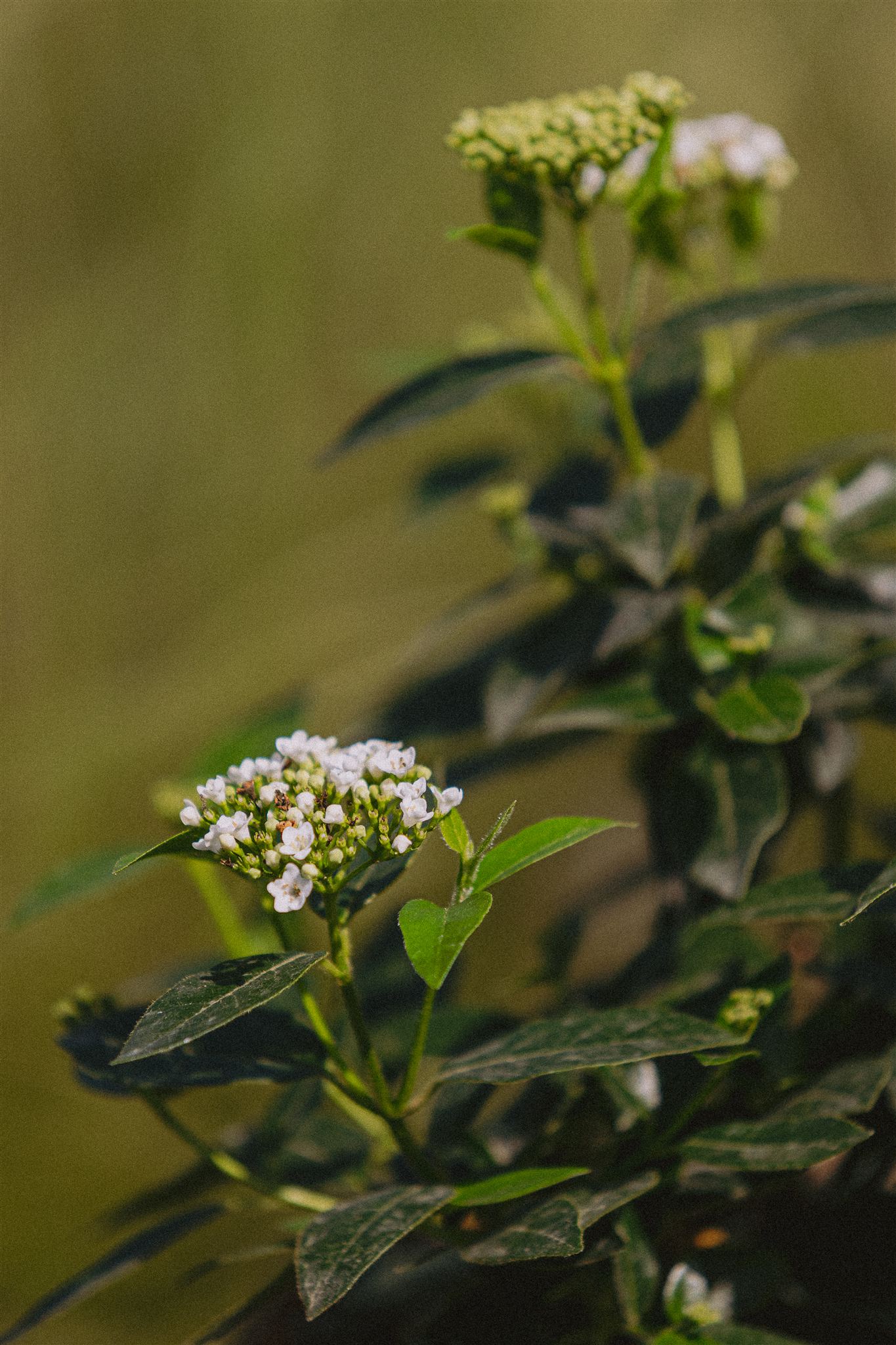
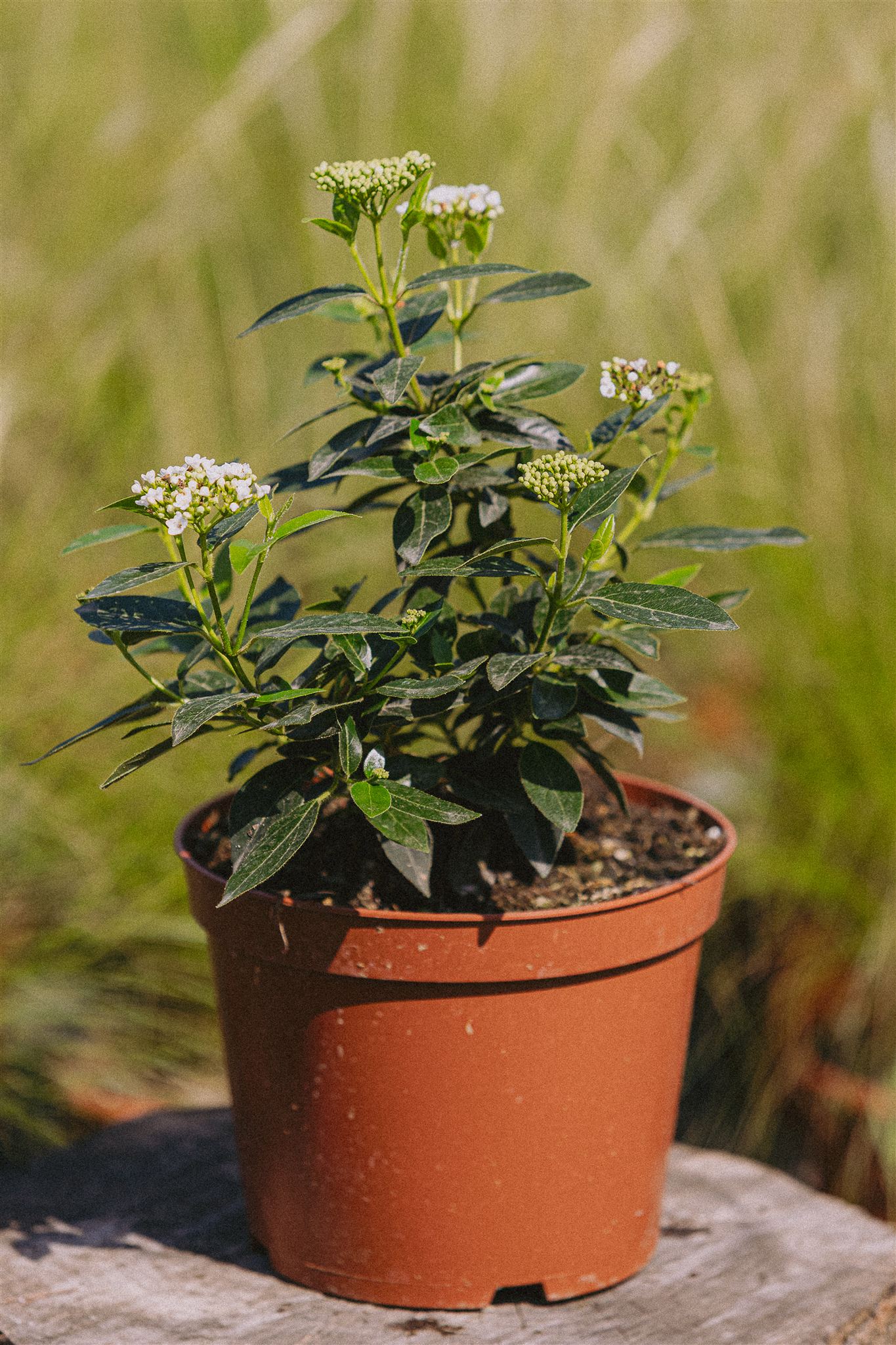
The laurustinus (Viburnum tinus) is a much-valued evergreen Mediterranean shrub, prized for its density, its ease of cultivation and its ability to provide greenery all year round with a very special bonus: it flowers in winter and at the start of spring, when few plants are in bloom. Its flower clusters appear in sprays, usually white (sometimes with pink buds), and after flowering very decorative dark blue berries can form.
It has a compact, branching habit that works very well as a hedge, living screen or background shrub in borders. It adapts well to both full sun and partial shade, and is an excellent choice for low-maintenance gardens because it copes well with variable conditions, provided the soil drains properly. It can also work in a large pot, although it will appreciate slightly more regular watering.
Image gallery
Benefits
Winter flowering that brings interest when the garden looks its dullest.
Evergreen shrub that stays green all year round.
Ideal for hedges and screens thanks to its density and good response to pruning.
Hardy and adaptable, perfect for low maintenance.
Produces decorative berries (depending on conditions), adding seasonal interest.
Good choice for sun or partial shade, easy to incorporate into many garden styles.
Contributes to biodiversity: flowers and fruits attract beneficial wildlife.
Special care
Good drainage: tolerates many soils, but not prolonged waterlogging.
Moderate watering: regular in the first year; afterwards, moderate watering, more frequently in summer if in full sun.
Sun or partial shade: in sun it flowers more strongly; in partial shade it keeps a fresher, denser green.
Prune after flowering: trim after winter/spring to maintain shape and density, especially if used as a hedge.
Light feeding: compost or balanced fertiliser in autumn or spring if more vigour is desired.
Watch for occasional pests: aphids on tender shoots or scale insects on very dense plants; usually prevented with ventilation and balanced watering.
In a pot: use a large container, airy substrate and more consistent watering than in the ground.