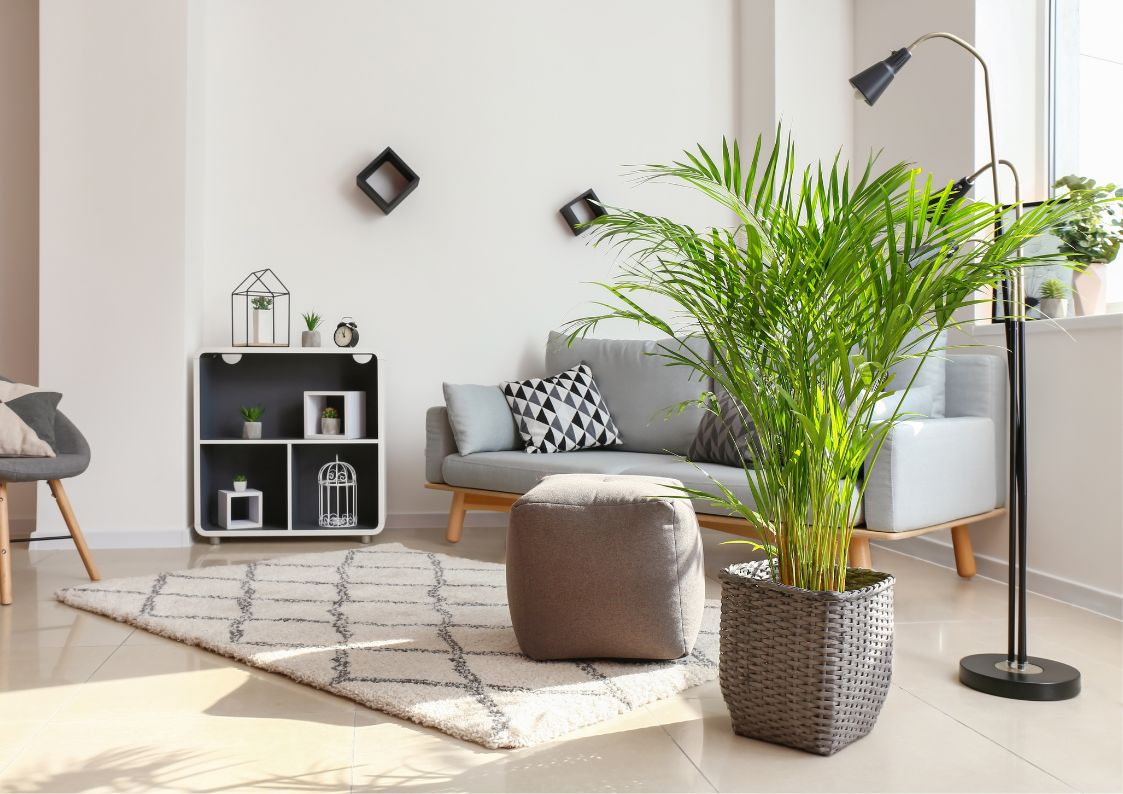
Welcome back once again to the Eiviss Garden blog. This week, we want to talk about indoor palms: Chamaedorea, Kentias and Arecas.
These elegant and resilient plants bring a tropical touch to any space, and with the right care, they can thrive for years in your home or office.
Palms are synonymous with tropical beaches and warm climates, but some varieties are perfectly adapted to living inside our homes. From today, you can visit our display at Eiviss Garden.
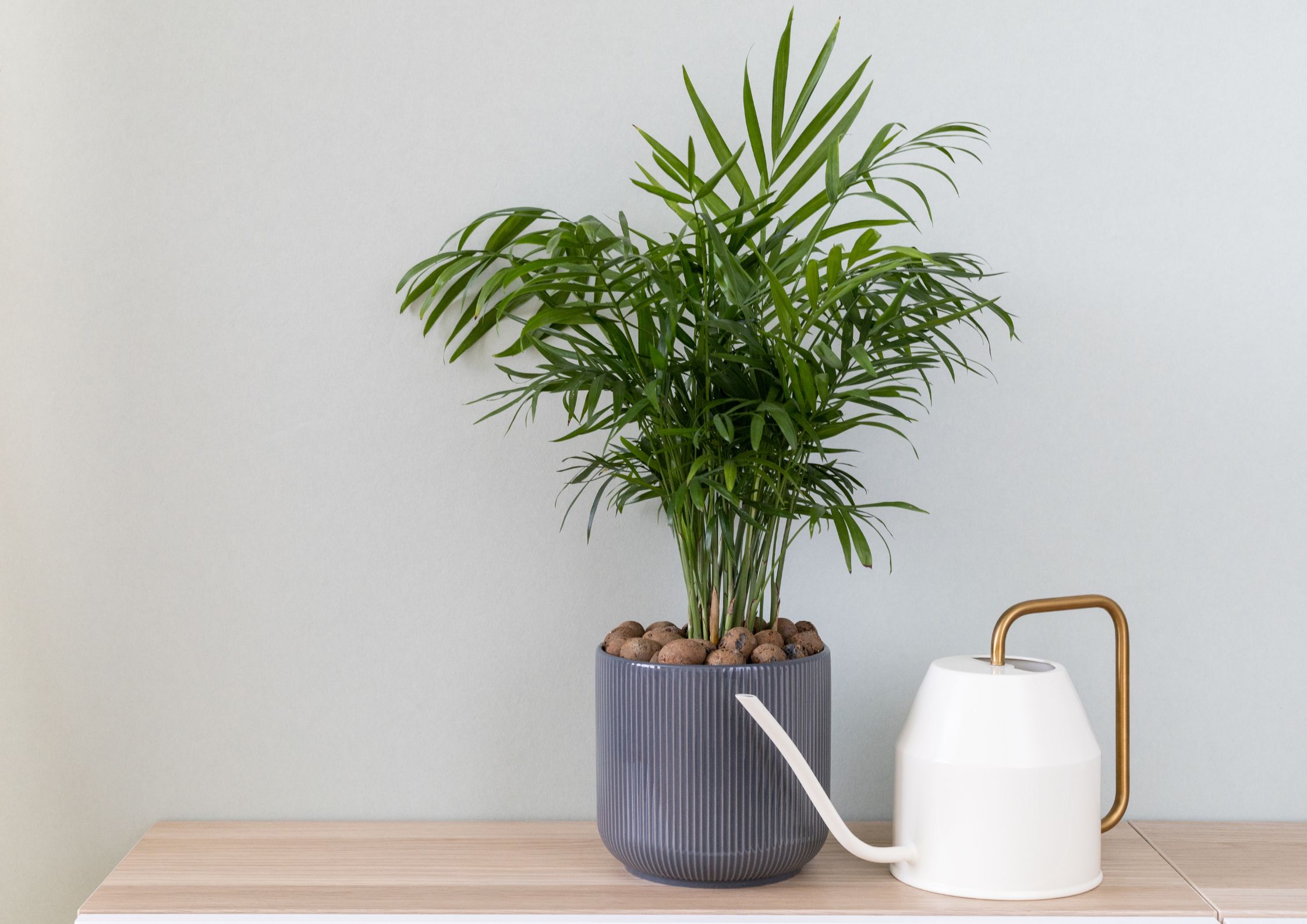
1. Chamaedorea (or Parlour Palm)
Originally from the tropical forests of America, Chamaedoreas are slow-growing plants that usually do not exceed 2 metres in height indoors. Their delicate stems and lush foliage make them a popular choice for decorating interiors.
Care
Watering: It is essential to keep a balance; the soil should be moist, but not soggy. It is advisable to water when the soil feels dry to the touch. Avoiding waterlogging can help prevent problems with root rot.
Light: They prefer indirect light and should be protected from direct sunlight to avoid leaf scorch.
Feeding: During the growing season (spring and summer), they can be fed with a diluted liquid fertiliser once a month.
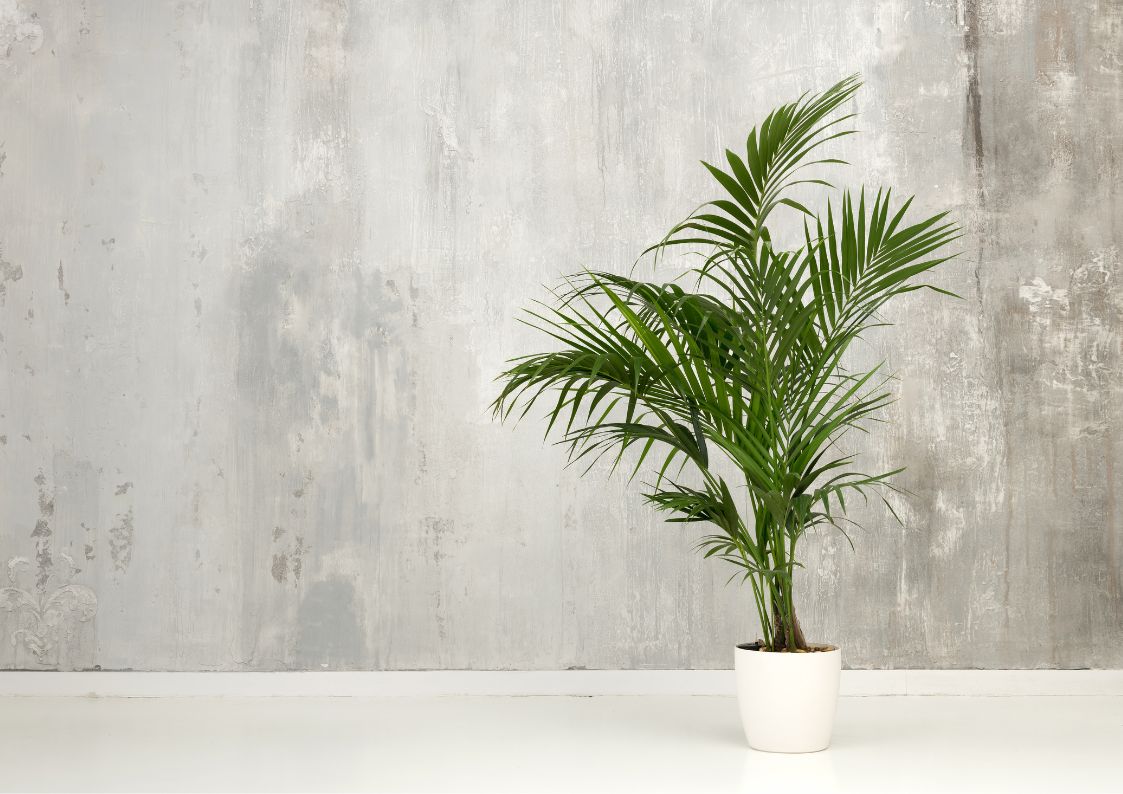
2. Kentias (Howea forsteriana)
Native to Lord Howe Island, near Australia, Kentias are known for their elegance and resilience. Their arching foliage and feathery fronds make them a popular choice for spacious interiors.
Care
Watering: Kentias like soil that stays moist, but not waterlogged. It is important to water them when the surface of the soil feels dry to the touch. In winter, watering frequency can be reduced.
Light: They prefer indirect light, although they can adapt to lower-light areas. Avoid exposing them to direct sunlight for long periods, as this could scorch the leaves.
Feeding: During spring and summer, you can feed your Kentia with a liquid fertiliser for green plants every two weeks.
3. Arecas (Chrysalidocarpus lutescens or Dypsis lutescens)
These palms, originally from Madagascar, are perhaps the most tropical in appearance, with multiple trunks and feathery fronds in a bright green. They are ideal for those looking for a plant that makes a bold statement.
Care
Watering: Arecas like moisture, but overwatering should be avoided. It is essential that the growing medium drains well to prevent water from accumulating around the roots.
Light: These palms benefit from well-lit spots, but direct, prolonged exposure to the sun should be avoided.
Feeding: During their active growing season, they benefit from regular feeding with a fertiliser specifically for palms.
Differences between the Kentia Palm and the Areca Palm:
At first glance, Kentia and Areca may seem similar, but there are a few key differences:
Size and Growth: While Kentias grow more slowly and are usually taller and less full, Arecas grow faster and can achieve a lush appearance in less time.
Foliage: Kentia leaves are darker and have a more pronounced arch than those of the Areca. Arecas, on the other hand, have lighter, finer leaves.
Hardiness: Kentias are generally more resilient in adverse conditions and cope better with dry air or low light. Arecas, on the other hand, are more sensitive and require more diligent care to maintain their tropical appearance.